


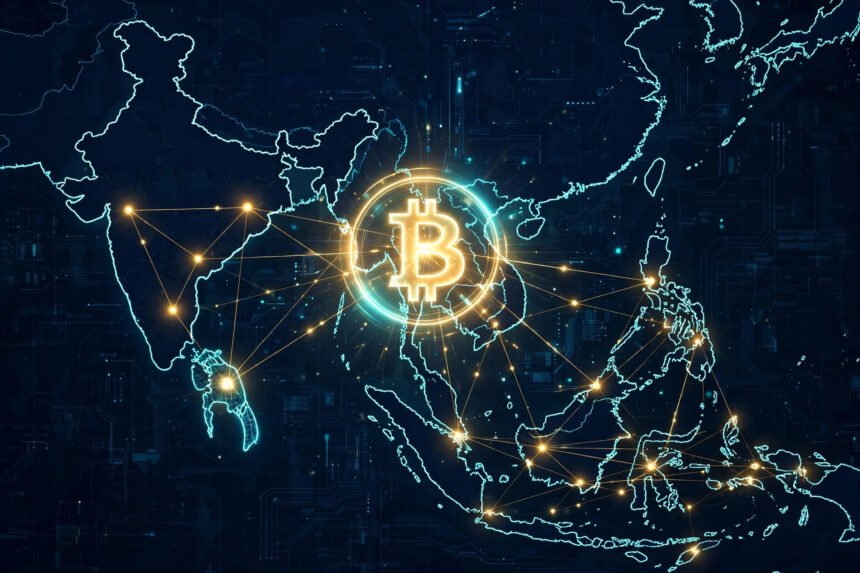
Binance to Expand Into Five Asian Markets After $6.3B Hack — Three Talks Already Advanced
Binance, the world’s largest cryptocurrency exchange, plans to expand into five Asian markets next year, its regional business head told Reuters on Wednesday — three weeks after a record $6.3 billion theft linked to North Korea. Talks with at least five or six markets are under way, three of them in advanced stages, and the exchange says it will not need to raise fresh funds to absorb the cost of the hack.
In short: Binance is pushing ahead with growth in Asia despite the largest crypto theft on record, saying the $6.3 billion hack was financially absorbable and that three of its five target markets are already in mature discussions.
Summary
- Binance is in talks to enter five Asian markets next year, with South and Southeast Asia as the priorities; details are expected in the first quarter of 2027.
- Three of the five or six market discussions are “in quite mature stages,” APAC head SB Seker told Reuters at the Singapore FinTech Festival.
- The exchange covered 95% of the stolen tokens with company money, froze $3 billion of the stolen assets with partners, and aims to reopen withdrawals for all remaining networks and assets by the end of this week.
- Seker said the cost of replacing the stolen tokens was “statistically … not a large amount” and Binance would not need to raise funds.
- Bitcoin traded at $63,993 at 13:30 UTC on Wednesday, down 1.6% in 24 hours, with the Crypto Fear & Greed Index at 11, or Extreme Fear.
“We Can Weather It,” Seker Says
Speaking on the sidelines of the Singapore FinTech Festival on Wednesday, Seker said Binance had “ongoing conversations with at least five or six markets … three of which are in quite mature stages.” He did not name the markets under discussion, but said South and Southeast Asia were the key priorities and that details of the planned expansion were expected to be rolled out in the first quarter of next year.
Binance currently holds operating licences in more than 10 jurisdictions. The expansion would extend its regulated footprint in the region where crypto trading volumes are highest, even as the industry absorbs the fallout from the October 29 breach.
Asked about the impact of buying replacement tokens on the company’s balance sheet, Seker said the amount was “statistically … not a large amount,” adding that Binance would not need to raise fresh funds to absorb the costs.
“I’m not downplaying the incident. I’m just saying as a metric,” he said. “In terms of the impact to us, we can take the impact and we can weather it without any change to the way we operate.”
Withdrawals to Fully Reopen This Week
The company resumed withdrawals in phases earlier this month after covering 95% of the lost tokens, and said it aims to reopen withdrawals for all remaining networks and assets by the end of this week. Binance used company money to buy replacement tokens and worked with industry partners to freeze $3 billion worth of the stolen assets. The exchange said in a social media post last week that it had completed coverage of assets impacted in the hack.
The FBI and Binance have said North Korea was responsible for the theft, which blockchain analytics firm Chainalysis has described as the largest crypto theft on record. Pyongyang has denied involvement.
The stolen funds have kept moving since the breach. The attacker behind the hack moved another $142 million in ether to seven new wallets this week, and earlier swapped $137 million in stolen ether for bitcoin through THORChain. About $2.35 billion of the stolen crypto remains unlaundered, according to on-chain trackers.
Regulators Contacted Within 48 Hours
Seker said Binance contacted regulators in Japan, South Korea, Australia, Thailand and New Zealand within the first 36 to 48 hours of the incident, to address questions about the scale of its impact and how the attack unfolded. No one country led the investigations, he said.
He added that discussions with regulators had since moved beyond the heist itself to broader concerns about security threats facing the crypto industry.
“The conversations now are ‘well, this is an omnipresent and spectrum-wide threat, and how does an entire ecosystem prepare for this?’ It’s moved away from the original incident to a much broader conversation,” Seker said. “We are part of the conversation, but we are not driving the conversation in isolation anymore.”
Binance says the Abu Dhabi Global Market’s Financial Services Regulatory Authority is its primary regulator, and that it pays taxes in jurisdictions where it has a taxable presence. The firm has no formally established headquarters.
Seker also said Binance publishes its proof-of-reserves, which show the crypto tokens it holds for customers, but does not share financial statements — including profit and loss statements, balance sheets and cash flow figures — with investors, including Abu Dhabi-backed investment group MGX.
Market Still in Extreme Fear
Bitcoin traded at $63,993 at 13:30 UTC on Wednesday, down 1.6% over 24 hours, according to CoinGecko. Ether stood at $1,794, down 1.7%, while XRP traded at $0.9847, still below the $1 level it lost earlier this month, and Solana was at $74.19. The Crypto Fear & Greed Index read 11, classified as Extreme Fear, unchanged from the previous day.
Bitcoin has now spent six consecutive weeks falling and remains about $1,000 below the $65,000 level it has repeatedly failed to reclaim. Minutes from the Federal Reserve’s October meeting are due later on Wednesday, with traders watching for clues on the path of interest rates.
Last updated: November 18, 2026, 1:30 pm UTC. Prices from CoinGecko at 13:30 UTC; Fear & Greed Index from alternative.me.