


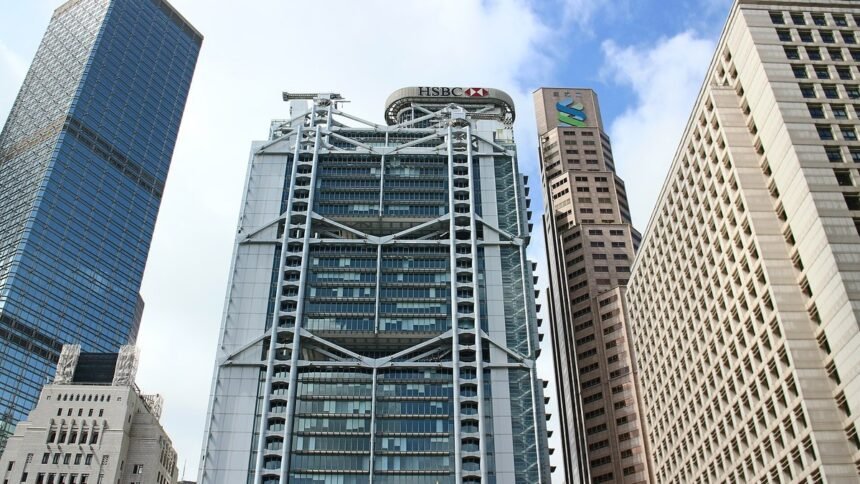
HSBC has opened a tokenized money market fund to retail customers in Hong Kong, letting them invest with its Hong Kong dollar stablecoin RedCoin from as little as HK$100 (about US$12.74). In short: the bank introduced a new tokenized unit class of its HSBC Global Money Funds – Hong Kong Dollar on November 19, the fund’s units run on Ethereum, and it is the first time RedCoin has been used for retail wealth management since the stablecoin’s debut in October.
crypto.news reported the launch in full, citing the South China Morning Post’s November 19 report, and Unlock Blockchain corroborated the details in its own account, with both outlets agreeing on the HK$100 entry point, the Ethereum backing and the RedCoin circulation figures.
Summary
- HSBC customers in Hong Kong can now subscribe to a tokenized share class (Class SD) of the HSBC Global Money Funds – Hong Kong Dollar using RedCoin, with subscriptions starting at 100 RedCoin, or HK$100 (US$12.74).
- Ethereum is the initial public blockchain designated for the fund’s tokenized units; each token represents one Class SD unit, with beneficial ownership recorded on-chain.
- The fund invests at least 70% of its net assets in short-term Hong Kong dollar deposits and high-quality money market instruments, and charges estimated ongoing annual fees of 0.38%.
- RedCoin circulation reached HK$591.46 million as of November 18, up HK$500.14 million in seven days, with cash reserves of HK$592.46 million.
- More than 50,000 users registered for RedCoin in its first week after its October 23 launch through the PayMe app.
A HK$100 entry point for tokenized investing
The low minimum is the point of the launch. The fund’s October offering documents list HK$10,000 as the standard initial investment for the tokenized classes, but the prospectus allows the manager to accept smaller subscriptions — and HSBC’s retail guide sets the RedCoin entry point at HK$100. Customers subscribe through the HSBC HK mobile banking app, where 100 RedCoin (RCHKD) meets the minimum, and the stablecoin is required for both subscription and settlement.
That puts a product once reserved for large investors within reach of ordinary savers. Tokenized money market funds have so far been aimed mainly at institutions; HSBC is using its own stablecoin to bring the same structure — daily liquidity, daily dividend distributions reinvested into additional units — to its retail customer base in Hong Kong.
HSBC’s tokenized fund runs on Ethereum
Ethereum is the initial public blockchain designated for the fund’s tokenized units. The manager and the tokenization agent may introduce other networks in the future, provided they meet comparable security standards, but the fund starts on Ethereum alone.
The product is managed by HSBC Investment Funds (Hong Kong) Limited, with HSBC Global Asset Management (Hong Kong) Limited serving as investment adviser. The Hongkong and Shanghai Banking Corporation acts as the tokenization agent, while HSBC Institutional Trust Services (Asia) Limited serves as trustee, registrar and transfer agent.
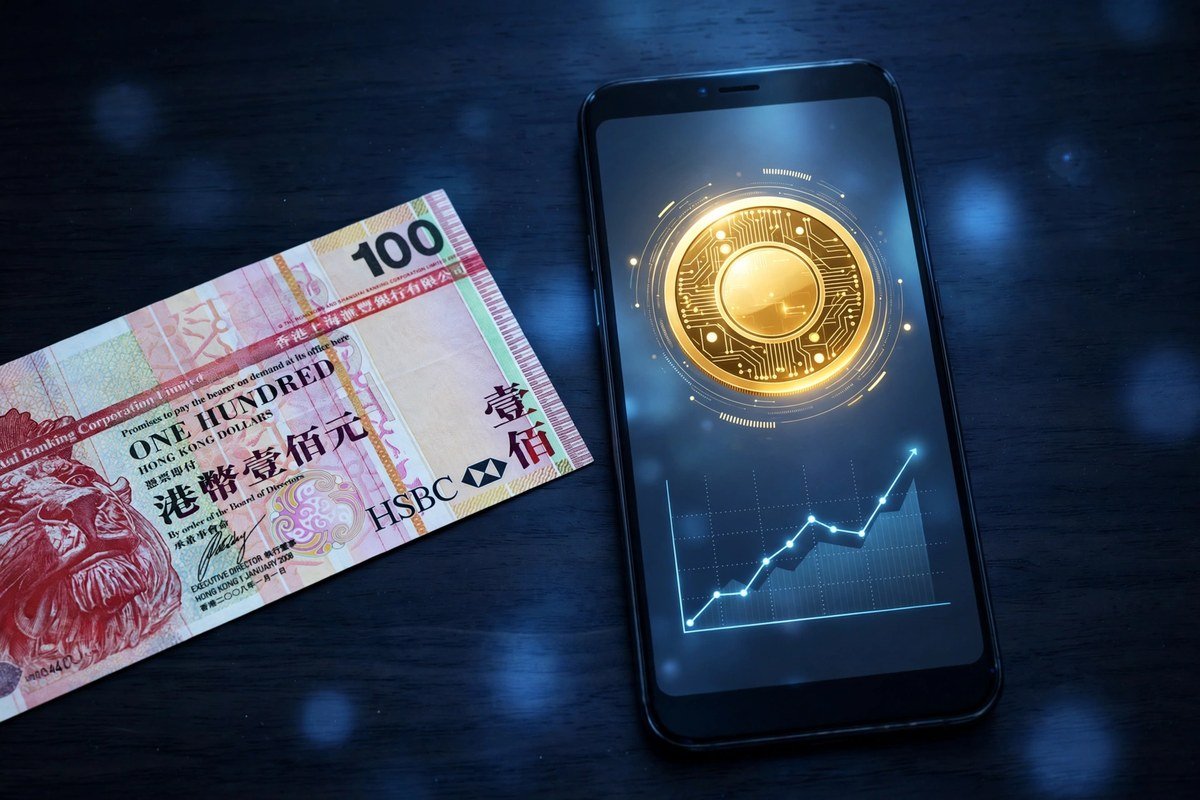
There are limits to how far the tokenization goes. Access to the tokens is restricted to approved digital wallets, and the official ownership register remains off-chain. The fund’s October prospectus specifies that final settlement occurs outside the blockchain, even though transactions in the tokenized units are recorded on-chain. The tokenized classes are available through primary-market subscriptions and redemptions only, with no secondary-market trading.
The fund itself is a conventional money market product in token form: it invests at least 70% of its net assets in short-term Hong Kong dollar deposits and high-quality money market instruments, seeks to preserve capital and provide daily liquidity — but does not guarantee that investors will recover their original investment. Estimated ongoing annual charges for the tokenized classes are 0.38%.
“Tokenised funds reduce traditional market friction”
Winnie Ng Wing-yee, head of wealth and premier solutions at HSBC Hong Kong, said the bank expected tokenized investments to reduce transaction friction and improve settlement times for customers.
“Tokenised funds reduce traditional market friction and enable faster settlement,” Ng said, adding that HSBC intends to introduce more tokenized investment products.
RedCoin circulation tops HK$591 million
The launch follows HSBC’s introduction of RedCoin through PayMe on October 23, when the bank began offering digital currency payments to its existing network of more than 3.3 million app users. HSBC group chief executive Georges Elhedery said earlier this month that more than 50,000 users registered for the stablecoin during its first week, according to the Post.
Circulation has grown sharply since then. HSBC’s reserve disclosure for November 18 lists HK$591.46 million in outstanding stablecoins, up HK$500.14 million over the preceding seven days. Cash reserves stood at HK$592.46 million.
Unlike the fund’s investment units, RedCoin operates on HSBC’s own distributed ledger network, where smart contracts handle issuance and transfers. RedCoin wallets on PayMe and the mobile banking app are separate, and customers cannot transfer tokens directly between them. The bank does not pay interest on stablecoin balances, which sit outside Hong Kong’s Deposit Protection Scheme, and it expects to publish its first independent reserve attestation after the fourth quarter of 2026.
Hong Kong’s stablecoin licensing framework
HSBC is one of two issuers listed in the Hong Kong Monetary Authority’s register of licensed stablecoin issuers. It received licence FRS02 on April 10, alongside Anchorpoint Financial, which holds licence FRS01. The licences followed the introduction of Hong Kong’s Stablecoins Ordinance on August 1, 2025, establishing requirements for the issuance, reserve backing and redemption of regulated fiat-referenced stablecoins.
Anchorpoint, a joint venture between Standard Chartered, Animoca Brands and HKT, began offering its HKDAP stablecoin to selected institutional participants in August. In October, the company announced a partnership with Solana to support native HKDAP issuance and redemption, without specifying a retail launch date.
Hong Kong authorities have been developing separate infrastructure for tokenized investments. Financial Secretary Paul Chan said earlier this month that publicly offered tokenized funds had grown approximately sevenfold over the past year, with two tokenized money market funds available for round-the-clock trading on a licensed platform since October.
Retail tokenization moves from payments to investing
RedCoin’s first month was about payments: transfers between individuals and payments to participating merchants. The tokenized fund is its first step into wealth management, and it shows how a licensed bank stablecoin can be used as the on-ramp for a regulated investment product rather than only as a payment rail.
The move sits alongside a wider push to put traditional assets onchain. Singapore’s central bank settled a $77.5 million tokenized bill sale in wholesale digital cash this week, and tokenized equities on Solana passed $1.22 billion in circulating value. HSBC’s fund adds the retail half of that picture: a household-name bank letting ordinary customers buy a tokenized fund with a stablecoin, from HK$100.
Market context
Bitcoin traded at $63,816 at about 10:23 UTC on November 19, according to CoinGecko, down 1.03% over 24 hours and roughly $1,735 above the $62,081 weekend low. Ether stood at $1,806.62, XRP at $0.9827 — still below $1.00 — Solana at $74.51, Binance Coin at $590.47 and Zcash at $947.55. The Fear & Greed Index read 10, in Extreme Fear, unchanged from the previous day.