


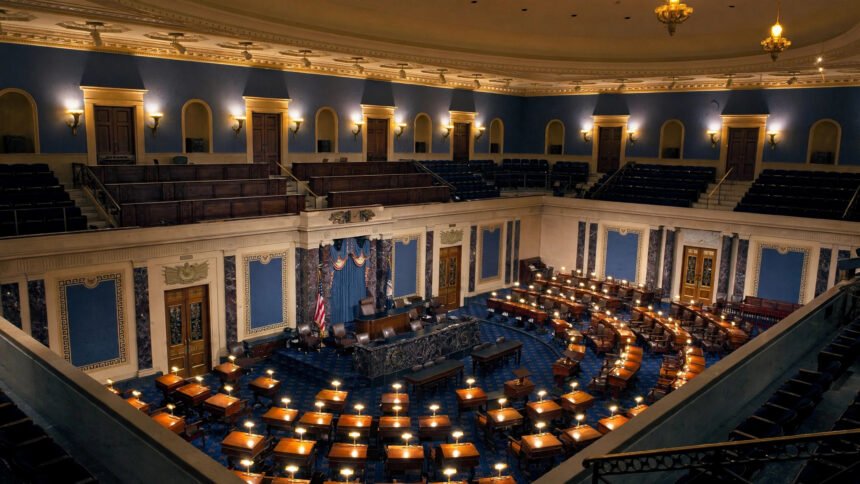
The United States Senate has passed the DEATH BETS Act, a bill that would ban federally regulated prediction markets from offering contracts tied to war, terrorism, assassination and events settled mainly by a person’s death. The bill passed by voice vote on Thursday, November 19, and now moves to the House of Representatives.
In short: the bill would amend the Commodity Exchange Act to stop CFTC-registered exchanges from listing or clearing the banned contracts, and it follows reports that traders made about $1 million betting on the timing of US strikes against Iran. Decrypt reported the bill passed with an amendment adopted by unanimous consent, while Cointelegraph reported it now needs House approval before it can reach President Donald Trump for signature.
Summary
- The US Senate passed the DEATH BETS Act by voice vote on Thursday, November 19, 2026, with an amendment adopted by unanimous consent.
- The bill would bar CFTC-registered exchanges and clearinghouses from listing or clearing event contracts tied to terrorism, assassination, war or US military operations, or contracts reasonably expected to settle mainly on an individual’s death.
- It was introduced by Sen. Adam Schiff (D-CA) in March 2026 and cosponsored by Sen. John Curtis (R-UT), after six Polymarket traders reportedly earned $1 million betting on the timing of US strikes against Iran.
- The bill now heads to the House of Representatives; it must pass there before going to President Donald Trump for signature.
- Prediction markets face growing legal pressure: New York has sued Coinbase and Gemini over their markets, and the CFTC has now taken 12 states to court, most recently Louisiana.
What the DEATH BETS Act bans
The full name of the bill is the Discouraging Exploitative Assassination, Tragedy, and Harm Betting in Event Trading Systems Act. It would amend the Commodity Exchange Act to prohibit exchanges and clearinghouses registered with the Commodity Futures Trading Commission from listing or clearing event contracts that expressly reference terrorism, assassination, war or US military operations.
The ban also covers contracts that, at the time of listing, are reasonably expected to resolve principally based on a death of an individual. The CFTC would be able to extend the ban to “any similar activity” by rule, giving the regulator room to cover new contract designs that try to work around the wording.
The bill would not affect the status of other types of contracts covered by existing CFTC rules on event contracts, such as those involving gaming, according to its text. It targets a narrow slice of the market: contracts that let traders profit from violent events and deaths.
Sen. Schiff announced the passage on X, writing that Congress is making it clear “these bets should be illegal.”
BREAKING: The Senate just passed my bill with @SenJohnCurtis to prohibit prediction markets from listing contracts involving terrorism, assassination, war, military operations, or an individual’s death.
With this bill, Congress is making it clear that these bets should be illegal.
— Adam Schiff (@SenAdamSchiff) November 20, 2026

The Iran-strikes trades that triggered the bill
Schiff introduced the bill in March, after reports that six Polymarket traders earned about $1 million betting on the timing of US strikes against Iran. Several of the wagers were placed just hours before the first reported explosions in Tehran, raising suspicions that the traders may have had access to nonpublic information.
When he introduced the bill, Schiff warned that allowing traders to profit from violent events could encourage the misuse of classified information, threaten national security and create incentives for violence. Prediction markets such as Kalshi and Polymarket let users trade on the outcome of real-world events, from elections and sports to geopolitics, and markets on wars and the fates of world leaders have drawn criticism from lawmakers who say they let people profit from tragedy.
The concern is not only about who profits. Senate Democrats have raised concerns that people close to President Donald Trump could profit from war-related markets, and one senator has alleged White House corruption over Iran war predictions. Kalshi was also sued after refusing to pay out on a market tied to the death of Iran’s then-Supreme Leader, Ali Khamenei.
What it means for Kalshi, Polymarket and Coinbase
The bill lands while prediction markets are already under heavy legal pressure from the states. New York has sued Coinbase and Gemini over their prediction markets, and the CFTC, which first sued three states in April to defend its authority over the markets, has now taken 12 states to court, most recently Louisiana.
Kalshi is fighting a $36 billion New York lawsuit that returned to state court, while a federal appeals court in Maryland ruled 2-1 against the exchange, backing state control of prediction markets. The DEATH BETS Act adds a federal legislative front to that fight: instead of arguing over which regulator has authority, Congress would simply ban the most controversial contracts outright.
The CFTC has already moved in the same direction. In June, it proposed rules that would ban markets on outcomes that could come about through war or assassination, such as vaguely worded bets on when US adversaries would be “out of office,” which Kalshi and Polymarket had used to sidestep existing bans on war-related contracts.
War-related markets have also appeared on smaller platforms, including Myriad, the prediction market operated by Decrypt’s parent company DASTAN, where users traded on whether US troops would enter Iran. A federal ban would apply across the board to CFTC-registered venues, whatever the platform’s size.
What happens next
The bill now moves to the House of Representatives, where it must pass before being sent to President Donald Trump for signature. No House vote date has been set, and the bill’s progress there will decide whether the ban becomes law in this Congress.
For the prediction market industry, the vote is a signal that the political argument has shifted. The debate is no longer only about whether event contracts are gambling or financial products. Lawmakers in both parties are now willing to draw a line at contracts that pay out on war, assassination and death, and the Senate’s voice-vote passage shows that line has broad support.
Crypto markets stayed under pressure while the vote was reported. Bitcoin traded near $59,494 on Friday afternoon, still below $60,000 after breaking the level for the first time since July, with Ethereum at $1,648 and the Fear & Greed Index at 12, in Extreme Fear.
Update — November 21, 2026 (early hours): The crackdown on prediction markets widened on Friday, when Reps. Sean Casten and Ted Lieu introduced the Policing Insider Trading in Prediction Markets Act. The bill would create a Justice Department program letting whistleblowers report prediction-market fraud anonymously, with possible compensation if the information leads to a successful enforcement action. Casten said prediction markets have “a serious insider trading problem.” The move follows the Senate’s passage of the DEATH BETS Act on Thursday, and comes amid scrutiny of bets placed on Polymarket ahead of the capture of former Venezuelan President Nicolás Maduro — including reports that an active-duty US Army soldier used confidential information to place bets. Source: The Block.