


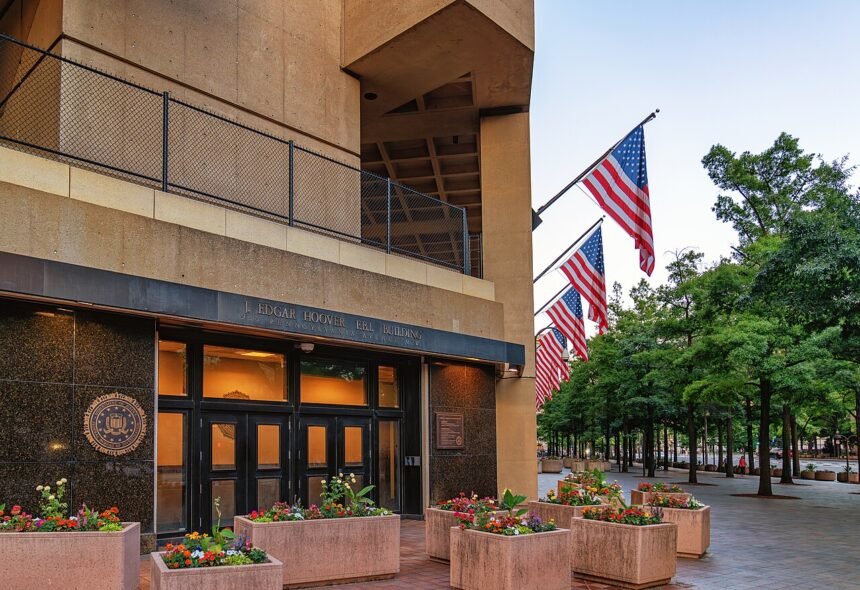
The Trump administration has launched a new Threat Disruption Center to stop money flowing to the foreign criminal networks behind crypto scams, cybercrime and sextortion schemes targeting Americans, with blockchain intelligence firm TRM Labs as its main private-sector partner on a contract worth about $95 million. The unit was announced on Wednesday by the Homeland Security Task Force’s National Coordination Center, which is co-led by the departments of Homeland Security and Justice. CoinTelegraph first reported the launch on November 19.
In short: the US government has set up a dedicated center to trace scam money in near real time and freeze it before it reaches overseas criminal networks, using TRM Labs’ Ardence platform as its main investigative tool and drawing on more than 30 federal agencies and over 440 state and local partners.
Summary
- The Threat Disruption Center is a new operational cell inside the Homeland Security Task Force’s National Coordination Center, co-led by the Department of Homeland Security and the Department of Justice, announced on November 18, 2026.
- TRM Labs was selected as the center’s primary private-sector partner and will provide and maintain Ardence, its investigative platform for mapping scam networks and identifying victims, plus engineering and investigative support.
- Bloomberg reported the government is paying TRM Labs about $95 million under a one-year contract, with more than 60 TRM employees assigned to the project.
- The center implements Executive Order 14390, signed in March 2026, which directs federal agencies to work with private companies to combat online fraud and cybercrime targeting Americans.
- The FBI received about 453,000 reports of online fraud in 2025, with reported losses exceeding $17.7 billion, while the Justice Department estimated in September that overseas scam centers cost Americans about $10 billion a year.
- Total reported cybercrime losses reached about $20.9 billion in 2025, up roughly 25% year over year, with crypto-related losses accounting for more than half, according to FBI figures reported by Bloomberg.
A center built to act before the money disappears
The center’s pitch is speed. It is designed as a shared technology resource and collaboration hub for the Homeland Security Task Force, which brings together more than 30 federal agencies and over 440 state and local partners. Its job is to take in victim reports, trace where the money went, identify the crypto wallets criminals used, and find other potential victims — then act while a fraud operation is still collecting money.
That action can take several forms. According to the Homeland Security Task Force, the center creates a standing mechanism for law enforcement and participating companies to share intelligence in near real time and convert it into action — for example, by pausing victim payments, taking down malicious web domains, or banning social media accounts used by scammers.
The urgency is spelled out by the FBI. “Every hour between a victim’s report and a response gives criminals more time to launder stolen funds and identify their next target,” said Heith Janke, operations director of the FBI’s Criminal Branch.

TRM Labs and the $95 million Ardence contract
TRM Labs will deploy Ardence — its orchestration platform for investigations and intelligence operations — as the center’s primary investigative tool, backed by dedicated engineering and investigative support. TRM describes the platform as a way to surface the information investigators need quickly and to identify the distinct components of criminal networks as well as their victim footprints.
Bloomberg reported that the government awarded TRM Labs a one-year contract worth about $95 million for the technical support, including an artificial intelligence platform as the primary investigative tool. More than 60 TRM employees are working on the project, and the contract runs through June 30, 2027.
The award itself has a contested history. The contract was awarded to TRM Labs in July through a non-competitive process, and rival blockchain analytics firm Chainalysis later sued the government alleging irregularities in the award. The case was dismissed in September.
TRM’s chief executive framed the work around the victims. “These scammers rarely stop after one payment — they drain a victim’s savings, or their retirement, over months and years,” said Esteban Castaño, co-founder and CEO of TRM Labs. “Stepping in sooner changes everything: a warning before the next payment, a scam website removed before it victimizes another family, or stolen funds frozen while they can still be recovered.”
The scale of the scam problem
The figures behind the launch show why the administration is building a dedicated unit. The FBI received about 453,000 reports of online fraud in 2025, with reported losses exceeding $17.7 billion, according to CoinTelegraph. In September, the Justice Department estimated that overseas scam centers cost Americans about $10 billion a year through schemes including crypto and online investment fraud.
The broader cybercrime total is larger still. FBI figures reported by Bloomberg put total reported cybercrime losses at about $20.9 billion in 2025, up roughly 25% from the year before, with cryptocurrency-related losses accounting for more than half of the total.
The center was created under Executive Order 14390, “Combating Cybercrime, Fraud, and Predatory Schemes Against American Citizens,” signed in March 2026. The order directs federal agencies to detect, disrupt, dismantle and deter cyber-enabled crime against Americans and to draw on the operational insights of the private sector in doing so.
Why crypto tracing sits at the center of it
Crypto is central to the problem the center is targeting because it is how much of the stolen money moves. Overseas scam networks — including pig-butchering and fake investment schemes — routinely take payment in cryptocurrency and then wash the proceeds through mixers and exchanges. Investigators have spent the past year tracing exactly those flows: Arkham tracked 2,266.68 BTC, about $161 million, leaving wallets linked to the Bitget hacker in 11 days, with nearly 96% of it entering CoinJoin mixers.
The center’s model is to bring the tracing capability inside the government response rather than leaving it to after-the-fact investigations. By linking federal and local investigators with banks and crypto platforms through one shared platform, it aims to shorten the gap between a victim’s report and a freeze — the window in which stolen funds are usually still recoverable.
Whether that model works will be measured in recoveries, not announcements. The center’s first test is whether its near-real-time intelligence sharing actually stops payments and freezes funds faster than the current patchwork of agency-by-agency investigations — and whether the $95 million platform delivers results that justify a contract its rival tried to overturn in court.
Bitcoin steady near $62,700 as the market waits
Bitcoin traded at $62,732 at around 02:24 UTC on November 19, down about 2.5% over 24 hours and still roughly $650 above the $62,081 weekend low it has held since mid-November. Ethereum traded at $1,773.14, XRP at $0.9624 — still below the $1.00 level — and the Fear & Greed Index sat at 10, in extreme fear.
Scam prevention has been a recurring theme on the site this week. Coinbase’s AI systems blocked $4.7 million in a deepfake Elon Musk Tesla scam as 500,000 people watched a fake livestream — a reminder that the scams the new center is built to fight are already operating at industrial scale.
Sources: CoinTelegraph; TRM Labs; Homeland Security Task Force; Bloomberg, via PANews and KuCoin.