


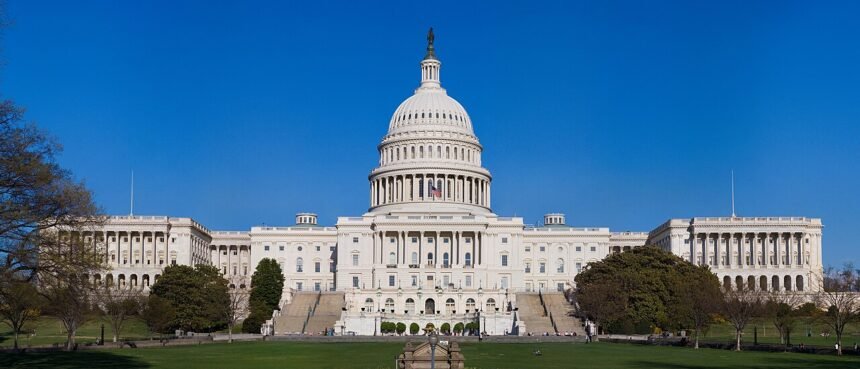
The first federal tax framework for cryptocurrency could reach the floor of the US House of Representatives before the current Congress ends, after the chairman of the tax-writing committee agreed the bipartisan bill has an opening for a vote, The Block reported on November 20. The Digital Asset Tax Certainty Act cleared the House Ways and Means Committee by 38-5 in September — the first time a federal crypto tax bill has passed a congressional committee.
Direct answer: Rep. Steven Horsford said Ways and Means Chair Jason Smith agreed the bipartisan Digital Asset Tax Certainty Act can pass the House before this Congress ends. The bill would exempt crypto network and transaction fees of $10 or less from tax, extend wash-sale rules to digital assets, and tax mining and staking rewards as ordinary income — but no date for a floor vote has been set.
Summary
- Rep. Steven Horsford (D-Nev.) said he wants the House to take up the bipartisan Digital Asset Tax Certainty Act before this Congress ends, after speaking with Ways and Means Chair Jason Smith (R-Mo.) earlier this week.
- Smith agreed “we have the opportunity to get our bipartisan bill through the House,” Horsford said on Thursday at The Hill and The Block’s Capitol Crypto Forum. No date for a vote was given.
- The bill, H.R. 10357, passed the Ways and Means Committee 38-5 on September 16, 2026 — the first federal crypto tax framework to clear a committee.
- It would exempt qualifying crypto network and transaction fees of $10 or less from capital gains reporting, and extend wash-sale rules to traded digital assets.
- Mining and staking rewards would be taxed as ordinary income, but the bill does not settle when that income is recognised — the timing question Horsford has pressed for months.
- The Treasury would have to set up a Digital Asset Voluntary Disclosure Program within 12 months of enactment, letting taxpayers correct past returns.
Smith Agreed the Bill Has an Opening, Horsford Says
Horsford, who helped develop the bill’s provisions, said he raised its prospects directly with Smith this week. “I talked to Chairman Smith earlier this week. He agreed that we have the opportunity to get our bipartisan bill through the House,” Horsford said at the Capitol Crypto Forum. He added that the bill should be brought up before the current Congress ends, though he did not give a date.
The bill takes in most of the provisions from the Digital Asset PARITY Act, which Horsford developed with Rep. Max Miller (R-Ohio). Smith, who introduced the Digital Asset Tax Certainty Act, called the September committee vote a historic moment after more than a year of bipartisan work, describing the package as the first-ever tax framework for digital assets.
The timing is tight. The House left Washington until after the November 3 midterm elections, and roughly five weeks of congressional sessions remain before the new term begins in January. Even if the House passes the bill, it would still need approval from the Senate and the president before becoming law — and the Senate’s broader crypto market structure bill, the Clarity Act, stalled in a 49-50 procedural vote in September, as we reported.
What the Bill Would Change for Crypto Users
The most widely felt provision is the $10 de minimis exemption. Under the committee-approved bill, a person paying a qualifying network or transaction fee of $10 or less in crypto would not recognise a gain or loss on that payment. Smith has argued the current rules force someone buying a cup of coffee with crypto to navigate what he called “an absurd maze of compliance.” The exemption would apply to dispositions after December 31, 2027, if the bill becomes law, and carries a carve-out for taxpayers who made more than 5,000 transfers in the prior year.
The bill would also extend wash-sale rules to digital assets. A loss on a traded digital asset — other than a qualified US dollar stablecoin — sold after September 14, 2026 would be disallowed if the seller buys the same or a substantially identical asset within 30 days before or after the sale. That closes a gap crypto traders have used for years: unlike stocks, digital assets have not been subject to wash-sale restrictions.
Stablecoins get distinct treatment under the package, and the bill requires the Treasury Department to establish a Digital Asset Voluntary Disclosure Program within 12 months of enactment, giving qualifying taxpayers a route to fix past returns and settle unpaid tax, interest and penalties.
The Mining and Staking Question Left Open
The one issue the bill does not resolve is when mining and staking rewards count as income. The text classifies validation rewards as ordinary income, taxable on receipt, but says nothing about when that income is recognised — the question the industry has pressed hardest. An earlier draft included a deferral provision, championed by Rep. Mike Carey, that would have let miners and stakers postpone tax until they sell. It was dropped from the text the committee released on September 14.
Horsford, who had proposed capping the deferral at five years, voted for the package anyway. “This bill is not as comprehensive as I would have liked, but I continue to believe that Congress needs to address when mining and staking rewards are recognized as income,” he said after the committee vote. “This package establishes ordinary income treatment, but leaves that timing question unresolved.”
The omission matters because it is the provision with the largest direct cost for miners and validators. Taxing rewards on receipt means operators owe tax on tokens they may not have sold, at prices that can fall sharply before a sale — a live issue in a market where Bitcoin has dropped below $62,000 and Ether is down more than 20% in November.
Clarity Act Still in the Picture
Horsford also said he remained bullish on the Clarity Act, the crypto market structure bill, despite its stalling in the Senate ahead of the US midterms — though he wants ethics and transparency guardrails added to the legislation. He described the GENIUS Act, the Clarity Act and the PARITY Act as a “three-legged stool” for digital asset policy: stablecoin rules, market structure and tax treatment, respectively.
That framing points to the lame-duck session as the last window for all three legs. Tax writers have a reason to move the crypto tax package even if market structure stalls: the wash-sale provisions raise revenue, which gives them a reason to attach the bill to a larger vehicle. The Blockchain Association, the Crypto Council for Innovation and the Digital Chamber have been pressing Congress to act on crypto taxes while the Clarity Act remains blocked.
The tax bill is not the only crypto tax change moving this week: the UK confirmed plans to defer DeFi tax bills until investors actually sell, with about 700,000 investors set to benefit from April 2027, as we reported. But the US bill is the one with a vote in sight — if Horsford and Smith can get it scheduled before the session runs out.
The Market Backdrop
Bitcoin traded at $61,566 at the time of writing (15:04 UTC, November 20), down 3.49% over 24 hours, while Ether stood at $1,733.77, Solana at $70.74 and BNB at $568.06. The Fear & Greed Index sat at 12 — extreme fear — and about $718.6 million in leveraged crypto positions were liquidated over the past 24 hours, according to CoinGlass data cited by CoinDesk, with 86% of the liquidations hitting traders betting on rising prices.
The tax bill does not change those prices. What it changes, if it passes, is the paperwork burden on every American who uses crypto — from the $10 fee exemption for small payments to the wash-sale rules that would end a long-standing tax advantage for traders. The next hard signal is a date: until the House schedules the vote Horsford is pushing for, the bill remains a committee success waiting on the floor.
Sources: The Block, TradingView / The Block, Unchained, CoinMarketCap Academy.