



Ledger chief technology officer Charles Guillemet will leave the hardware wallet maker at the end of 2026 after nine years, as the company’s investigation into tampered devices reaches beyond Southeast Asia into Europe and the Middle East — where two customers in Dubai reported losing about $604,000, as crypto.news reported.
In short: the man who built Ledger’s security lab is leaving just as the tampering probe he helped lead widens — and the devices at the centre of it can pass authentication checks even after being opened and fitted with hidden parts.
Summary
- Ledger CTO Charles Guillemet announced on November 19 that he will leave at the end of 2026 after nine years, to build a new cybersecurity venture. He said the transition had been planned for months and did not link his departure to the tampering investigation.
- Ledger’s November 18 investigation update confirmed tampered hardware wallets beyond Southeast Asia, including in Berlin and Dubai. One affected Ledger Nano Gen5 was identified in Southeast Asia, and customers who bought devices in Berlin from January 2026 have been told to contact support.
- Two customers in Dubai reported losing about $604,000 after buying Ledger wallets from retailer Virgin Megastore — one lost around 1,300 Solana, the other 507,000 USDT.
- The attack works by fitting concealed components into genuine devices to capture recovery phrases during setup, without touching the secure chip or operating system. Ledger says it found no flaw in its Secure Element or operating system, and no confirmed case involving a device bought directly from ledger.com.
- Blockchain analytics firm Bitquery estimated the associated thefts drained about $102 million from 335 wallets across six networks, with about $1.68 million in further outflows linked to the Dubai and Berlin reports.
Nine years, from a blank page to the CTO’s office
Guillemet joined Ledger as chief security officer in December 2017, when the French hardware wallet maker was still a relatively small startup. He went on to build Ledger Donjon, the company’s security research laboratory, before taking over as chief technology officer.
During his tenure, Donjon investigated vulnerabilities across hardware, software and infrastructure, including smartphone secure boot systems, and expanded its research into post-quantum cryptography and artificial intelligence-based security tools. Ledger says it has sold more than 8 million hardware signing devices across 180 countries, that its products protect roughly 20% of the world’s crypto assets, and that its enterprise business serves more than 100 financial institutions and brands.
“We’ve been preparing this transition for many months, so Ledger’s teams, partners and roadmaps are ready,” Guillemet wrote in his announcement. He said his next project would focus on security threats that have become easier to carry out with artificial intelligence, and that further details would follow. He did not name a successor or give a specific departure date beyond the end of the year.
How the tampering works
Ledger first detailed the attack in October. Criminals bought genuine hardware wallets, opened them and installed concealed electronic components before returning them to reseller distribution channels. The implants were designed to capture users’ recovery phrases during wallet setup, letting attackers take the cryptocurrency without compromising the device’s secure chip or operating system.
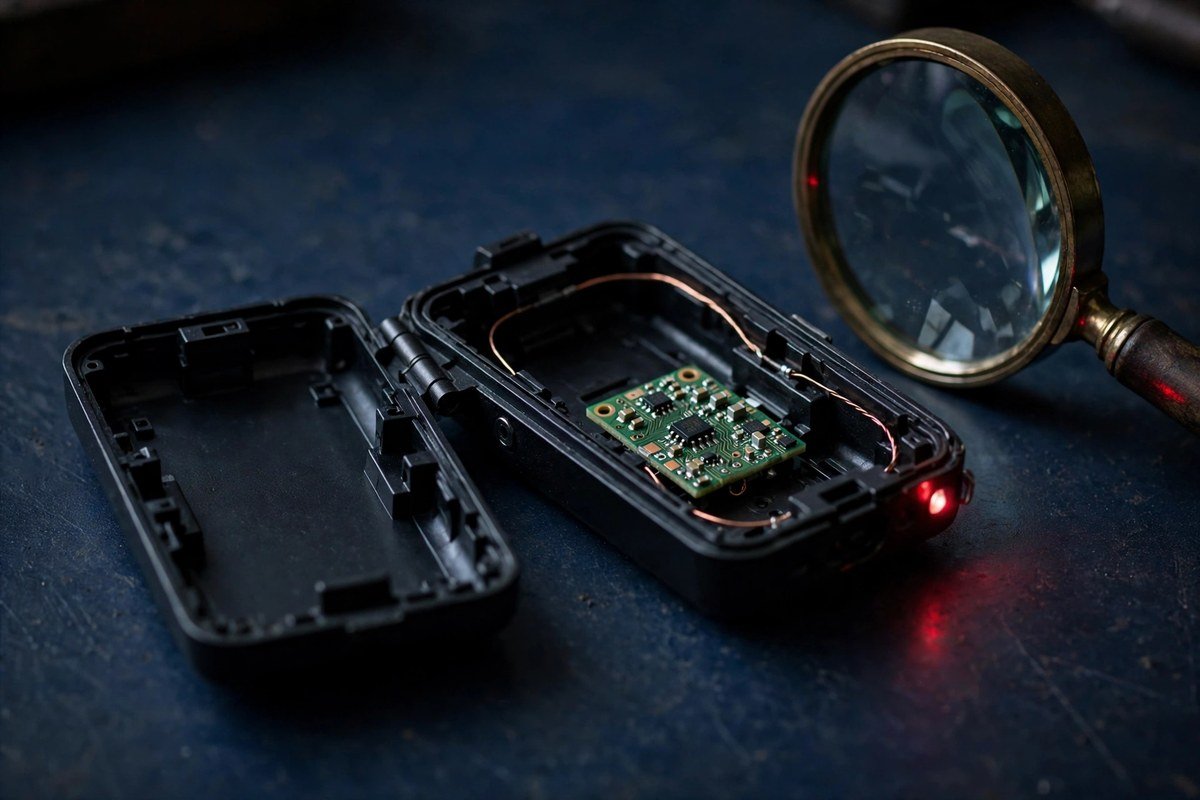
The danger is that a modified genuine device can pass authentication checks. A buyer who checks the device the usual way may see nothing wrong, because the tampering sits inside the casing rather than in the firmware. In its October 15 statement, Ledger described the incident as a distribution channel attack and asked authorized resellers in Southeast Asia and Hong Kong to suspend sales. It has since tightened reseller requirements, including restrictions on displaying devices in stores and reselling returned products.
Ledger is also offering X-ray inspection of suspected devices at its Vierzon factory, and its investigation remains active, with Donjon examining suspected devices alongside law enforcement and distribution partners.
The Dubai cases, and a familiar reseller
The latest investigation update followed reports of cryptocurrency losses involving Ledger wallets bought from authorized retailers. As crypto.news reported on November 18, two customers in Dubai said they lost about $604,000 after buying Ledger devices from Virgin Megastore. One reported losing around 1,300 Solana, while another said 507,000 USDT had been stolen.
Security researcher and former Mt. Gox chief executive Mark Karpelès identified an unauthorized circuit board and antenna from photographs of one of the devices. Physical tampering in the second case had not been confirmed.
The pattern is not unique to Ledger. Rival manufacturer Trezor faced similar problems involving devices sold through the same reseller, CryptoBilis — Trezor confirmed hidden implants in three Safe 5 wallets and cut about 80% of its reseller network. The shared reseller link raises the same question for both companies: how a genuine device, bought from a shop, can reach a customer already carrying a spy inside it.
What owners should do
Ledger has said the problem is in the distribution channel, not in the devices it ships itself — it reported no flaw in its Secure Element or operating system, and no confirmed case involving a device bought directly from ledger.com. That leaves the practical advice unchanged but sharper: buy hardware wallets directly from the manufacturer, not from a marketplace or a shop shelf, and treat any device whose packaging or casing looks opened as suspect.
Anyone who set up a wallet bought through a reseller and later saw funds move without their approval should contact Ledger support — customers who bought devices in Berlin from January 2026 have already been told to do so — and move any remaining funds to a fresh wallet with a new recovery phrase generated on a device bought direct.
Bitcoin holds near $62,900 as the Anthropic debut begins
The wider crypto market steadied on Thursday. Bitcoin traded at $62,866 at about 15:44 UTC, according to CoinGecko, down 0.50% over 24 hours and $785 above the $62,081 weekend low it has now tested twice. Ethereum traded at $1,773.69, up 0.53% over 24 hours, while XRP traded at $0.968829, still below $1.00, Solana traded at $73.67 and BNB traded at $585.04. The Crypto Fear & Greed Index stood at 10, in “Extreme Fear” territory, and CoinDesk reported $181 million in liquidations over 24 hours, 77% of them long positions.
Attention now turns to Anthropic, which priced its record $81.3 billion initial public offering at $83 a share. The AI firm’s shares began trading on the Nasdaq on Thursday under the ticker ANT, with the indicated open at $99.82 as of 9:50 a.m. Eastern Time — about 20% above the IPO price — though a printed first-trade price had still not surfaced by mid-afternoon, and tokenized Anthropic stock is already live on crypto rails for eligible investors outside the United States.