


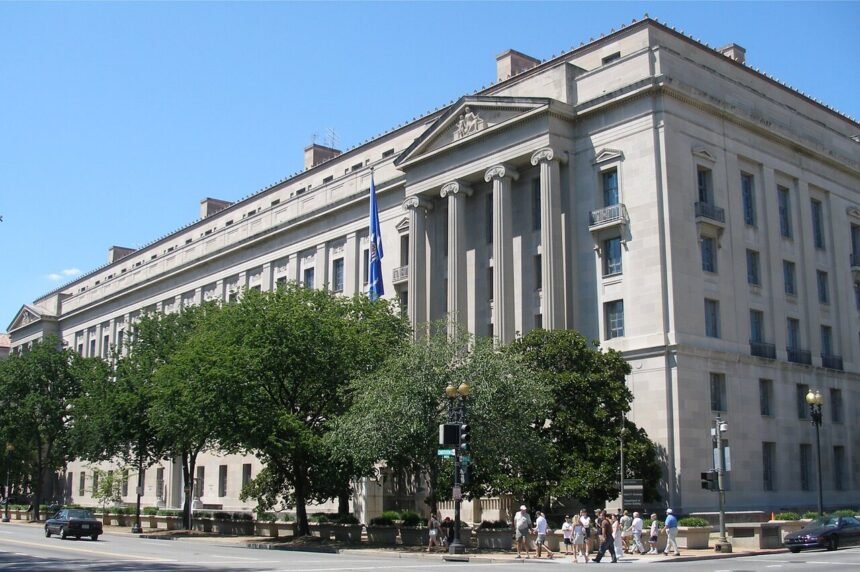
The US Justice Department filed a civil forfeiture complaint on Monday, November 23, asking a federal judge in Washington, D.C. to hand the United States ownership of more than $1.1 billion in USDC stolen from Binance last month — the first time prosecutors have asked a court to take title to the stolen stablecoins rather than simply hold them under a restraining order. The filing lands as investigators say at least $247 million of the loot has already been pushed through bitcoin mixers.
The Justice Department filed a civil forfeiture complaint on November 23, 2026 seeking more than $1.1 billion in USDC stolen from Binance on October 29, 2026, in a case filed in the US District Court for the District of Columbia as Civ. No. 26-4150.
Summary
- The Justice Department filed a civil forfeiture complaint on November 23, 2026 seeking more than $1.1 billion in USDC — a stablecoin issued by Circle — stolen from Binance on October 29, 2026.
- The complaint, filed in the US District Court for the District of Columbia as Civ. No. 26-4150, lists about $1.17 billion in USDC across 36 addresses on 18 blockchains, according to The Block’s tally of the balances in the filing.
- The assets were already frozen under a temporary restraining order obtained on November 12, when the department first won court approval to seize or restrain more than $1.2 billion tied to the hack.
- US authorities say they have now helped freeze, seize or return almost $3 billion of the more than $6 billion stolen — up from the $2.7 billion figure given in the November 12 announcement.
- Elliptic said at least $247 million of the stolen funds has passed through bitcoin coinjoins designed to hide their source, while about $2.35 billion remained in wallets linked to the theft as of November 20.
- No refund process exists yet for Binance customers from the forfeiture. The complaint asks a judge to give the coins to the United States; getting money back to users is a separate step the filing does not describe.
The complaint targets the frozen USDC, not the hackers
The case is brought in rem — against the property itself. The caption reads “United States of America v. All USDC Associated with 36 Virtual Currency Addresses on 18 Different Blockchains,” and it names no defendant and charges no person. Prosecutors must show the coins trace to the theft, not identify who holds them. The complaint attributes the October 29 theft to North Korean military hackers identified in the filing as Lazarus Group/Advanced Persistent Threat 38, the same TraderTraitor group the FBI blamed for the attack.
The property list runs from Subject Address A to Subject Address JJ, but the headline count overstates the number of separate stashes. A close reading of the list shows the 36 entries resolve to seven distinct address strings, because the same two hex addresses recur across almost every Ethereum-compatible network named in the complaint, according to an analysis of the filing by Blockchain Reporter.
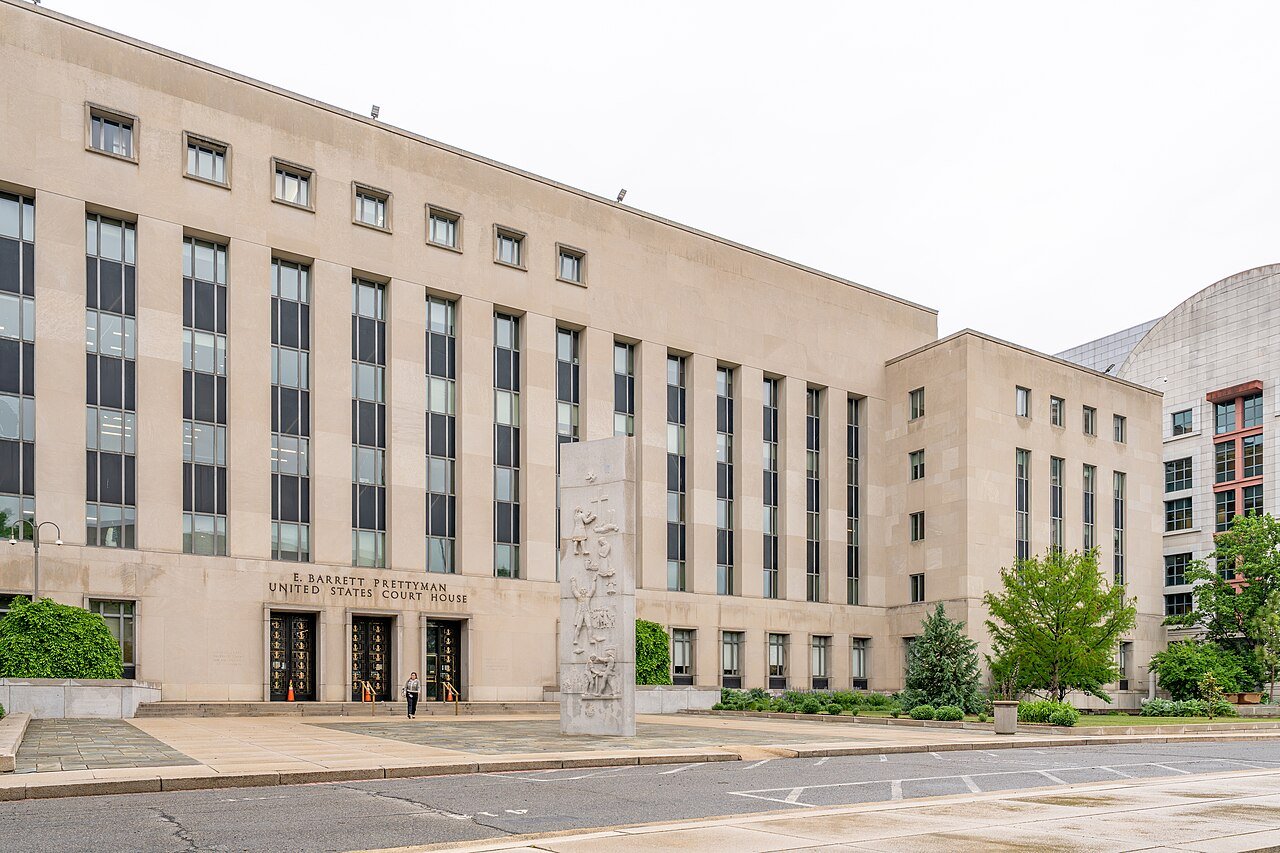
The filing also reconstructs the opening minutes of the theft in timestamps. On October 29, 9,707,546.77 USDe landed at Subject Address A at 20:24 UTC, followed by 573,469 AVAX at 20:35 and about $780 million in USDC on Ethereum at 20:41, with a further $43 million in USDC arriving at 20:59. The AVAX was split, bridged and swapped, then reconsolidated as 1,563,812.78 USDC at Subject Address D.
Circle froze the coins within an hour; the court order took two weeks
Circle voluntarily froze the USDC about an hour after the hack, according to the Justice Department’s account, and a US court issued a formal restraining order on the same funds on November 12. The forfeiture complaint followed eleven days later. Circle has agreed to voluntarily issue new USDC in an amount equal to the defendant property and send those substitute tokens to the government once the court issues a final order of forfeiture, because the frozen coins themselves cannot be moved.
That matters because of the scale: USDC’s market capitalisation stood at about $69.0 billion on November 23, with the token trading at $0.9996, according to CoinGecko data cited in coverage of the filing. A $1.1 billion substitution would be roughly 1.6% of the existing supply, minted only after a court order and only to replace coins the government cannot touch.
The FBI, the US Secret Service and IRS Criminal Investigation are investigating the case, with assistance from Circle, the department said. Binance now has 30 to 60 days to file a formal claim in court once the government publishes public notice of the lawsuit. Binance announced two weeks after the hack that it had fully reimbursed users from its own corporate treasury, company profits and its Secure Asset Fund for Users (SAFU) emergency reserve.
$247 million already moved through mixers
While the frozen USDC sits still, the rest of the loot is moving. Elliptic said at least $247 million stolen in the hack has passed through bitcoin transactions that combine funds from multiple users to obscure their movement, known as coinjoins, according to CoinDesk. Elliptic founder Tom Robinson said the coinjoins are being coordinated by one individual identified only as Kruw, and that about $2.35 billion remained in wallets linked to the theft as of November 20, with little evidence the funds had been converted into cash.
Elliptic’s investigation tracked the stolen funds across more than 27,000 wallets on at least 16 blockchains, involving some 90,000 transactions. The firm said $2.85 billion of the stolen funds had been frozen or seized — a figure that sits just under the Justice Department’s “almost $3 billion” total for assets frozen, seized or returned since the theft, with the gap explained by the different dates and definitions behind the two counts. IsCoinLegit previously covered the laundering trail in its report on $149 million moving through coinjoins; the new $247 million figure shows the mixing has continued since then.
What this does — and does not — do for victims
The filing is a major step in the recovery effort, but it is not a recovery yet. A forfeiture order would transfer ownership of the USDC to the United States. It does not create a refund process, name recipients or set a distribution timetable, and the department’s announcement does not say how the money would reach Binance customers, if it ever does. The department frames the case as part of its push to assist Binance in recovering more than $6 billion in stolen assets.
That gap is the one to watch. The November 12 announcement covered more than $1.2 billion in assets; Monday’s complaint covers the $1.1 billion-plus USDC slice of it, with the balances listed totalling about $1.17 billion. The remaining billions — including the $2.35 billion Elliptic says is still sitting in hacker-controlled wallets — are either frozen elsewhere, still moving, or unaccounted for. The next steps are the public notice, Binance’s claim, and the judge’s decision on forfeiture — and, separately, whether any of the frozen funds ever make their way back to the people the hack actually hit. IsCoinLegit covered the original seizure authorisation in its November 16 report on the $1.2 billion seizure order.
Bitcoin traded at $61,342 at the time of writing, with ether at $1,714.06 and the Fear & Greed Index at 11, Extreme Fear.