


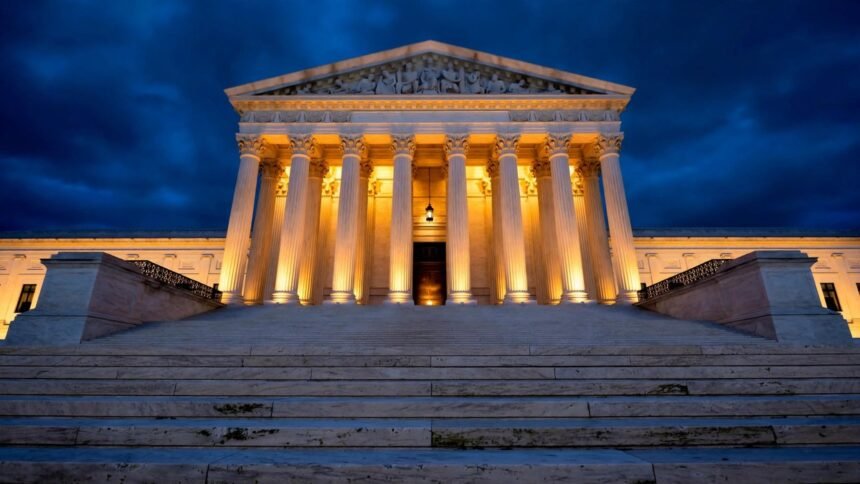
A federal appeals court has ruled that Maryland can regulate Kalshi’s sports event contracts under state sports-wagering law, handing the prediction market its third appellate defeat and deepening a split between the courts that now points toward the U.S. Supreme Court. The U.S. Court of Appeals for the Fourth Circuit ruled 2–1 against Kalshi, affirming a lower court’s refusal to block Maryland’s gaming regulators, Unchained reported.
The answer to the question at the heart of the case is still unsettled: the three judges on the panel each reached the same result for a different reason, and only the dissenting judge found that federal law shields Kalshi’s contracts from state oversight.
Summary
- The Fourth Circuit ruled 2–1 that Maryland can regulate Kalshi’s sports contracts, affirming the denial of a preliminary injunction in a published opinion dated November 18, 2026.
- It is the third of four recent appellate decisions to side with state oversight of prediction markets; the Third Circuit ruled the other way for Kalshi.
- The three judges split on the reasoning: one declined to decide whether the contracts are swaps, one said they are not swaps, and the dissent said they are swaps under the CFTC’s exclusive jurisdiction.
- The Commodity Futures Trading Commission has separately told regulated exchanges, including Kalshi, Polymarket and Coinbase, to offer contracts in all 50 states within 30 days — and that deadline is about to expire.
- Kalshi traded $114.31 billion in the 30 days to November 17, about 84% of all prediction-market volume across the three main venues.
Three judges, three different answers
The case turns on whether Kalshi’s contracts are “swaps,” a category of derivatives over which the Commodity Exchange Act gives the Commodity Futures Trading Commission exclusive jurisdiction when they trade on a federally registered exchange. Kalshi is regulated by the CFTC as a designated contract market, and its argument has been that federal law preempts state gambling rules.
Judge Roger Gregory declined to decide that question. Even if the contracts are swaps, he wrote, gambling has long been a state matter, and he would not infer that Congress displaced Maryland’s “concurrent authority absent a clear expression of its intent to do so.”
Judge Stephanie Thacker, who also voted to affirm, went further. She said in her concurrence that the contracts are “not swaps within the meaning of the CEA” and sit outside the CFTC’s exclusive reach. “Therefore, Maryland officials can co-regulate these contracts,” she wrote.
Judge DeAndrea Gist Benjamin dissented. In her view the contracts are swaps under the CFTC’s exclusive jurisdiction, and she wrote that “I would vacate the district court’s denial of the preliminary injunction and remand for further proceedings.”

How the case got here
Maryland’s gaming regulators sent Kalshi a cease-and-desist letter on April 7, 2025, giving it 15 days to stop offering the contracts in the state without a sports wagering license. Kalshi sued on April 21, 2025, arguing that the Commodity Exchange Act preempts the state’s sports-wagering laws, and U.S. District Judge Adam Abelson denied its injunction request on August 1, 2025.
Maryland drew friend-of-the-court support from Nevada, Ohio and 36 other states, plus the District of Columbia. Investment firm Paradigm and Underdog Sports filed in support of Kalshi.
The ruling addresses only Kalshi’s request for a preliminary injunction, not the final merits of its lawsuit. No Maryland ban is in place yet, but the state’s pause on enforcement was tied to this ruling, and Maryland is now free to pursue it. Maryland Attorney General Anthony Brown said Kalshi must satisfy the same consumer protection requirements as other sportsbooks serving Maryland residents.
A split that points to the Supreme Court
The decision puts the Fourth Circuit alongside the Sixth and Ninth Circuits, which also rejected Kalshi’s argument that federal law overrides state gambling rules, while the Third Circuit ruled for Kalshi in its New Jersey case. Three of the four recent appellate decisions have now favored state oversight.
That kind of disagreement between appeals courts is what draws the Supreme Court’s attention. After the Ninth Circuit’s Nevada ruling in August, Zero Knowledge Group founder and Bits + Bips host Austin Campbell called that kind of split “catnip for the Supreme Court, and the number-one way that they end up taking cases.”
Kalshi, for its part, argued the rulings contradict one another. A company spokeswoman said the decision “demonstrates there is no unified coherent legal argument against prediction markets,” pointing out that the three judges could not agree on why the company violated the rules.
The CFTC’s 30-day deadline is running out
The ruling lands as a separate clock is running out. The Commodity Futures Trading Commission has given its regulated exchanges, including Kalshi, Polymarket and Coinbase, 30 days to offer their contracts in all 50 states instead of applying the geographic restrictions that many states have ordered. That deadline is about to expire, leaving operators caught between a federal demand to serve every state and court rulings that let states police them.
CFTC Chairman Mike Selig and the industry still maintain that the event contracts are swaps that should be traded on regulated derivatives exchanges, and therefore that states have no authority to interfere. Coinbase is named among the operators covered by the CFTC’s demand, though no court action has been taken against it.
What is at stake
The stakes go beyond one state’s sports contracts. Kalshi traded $114.31 billion in notional volume in the 30 days to November 17, about 84% of the $136.05 billion traded across Kalshi, Polymarket US and Polymarket combined, according to Castle Labs. Kalshi’s open interest stood at $1.35 billion on November 19, with sports making up 46.9% of it — the same category of contracts at the center of the Maryland case.
The legal uncertainty also hangs over the wider crypto regulatory picture. With Congress’s Clarity Act stalled after a 49–50 Senate vote, lawmakers have said the fallback is regulators writing the rules themselves — and the prediction-market fight is now being decided court by court instead.
Until the Supreme Court takes up the issue, the conflicting rulings leave the rules unclear for every platform in the sector. Bitcoin traded at $62,040 at 21:01 UTC on November 19, down 0.80% over 24 hours, according to CoinGecko data.